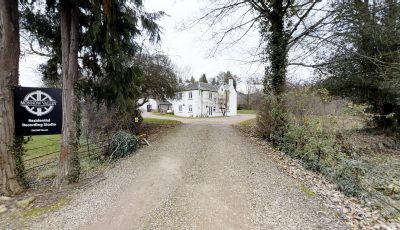
Charles Hardin Holley (September 7, 1936 – February 3, 1959), known professionally by his stage name Buddy Holly, was an American singer, songwriter, and musician who was a central and pioneering figure of rock and roll. He was born to a musical family in Lubbock, Texas, during the Great Depression, and learned to play guitar and sing alongside his two siblings. Holly made his first appearance on local television in 1952, and the following year he formed the group Buddy and Bob with his friend Bob Montgomery. In 1955, after opening once for Elvis Presley, Holly decided to pursue a career in music. He played with Presley three times that year, and his band’s style shifted from country and western to rock and roll. In October that year, when Holly opened for Bill Haley & His Comets, he was spotted by Nashville scout Eddie Crandall, who helped him get a contract with Decca Records. Holly’s recording sessions at Decca were produced by Owen Bradley, who had become famous for producing orchestrated country hits for stars like Patsy Cline. Unhappy with Bradley’s musical style and control in the studio, Holly went to producer Norman Petty in Clovis, New Mexico, and recorded a demo of “That’ll Be the Day”, among other songs. Petty became the band’s manager and sent the demo to Brunswick Records, which released it as a single credited to the Crickets, a name chosen by the band to subvert Decca’s contract limitations.
Information sourced from Wikipedia, licensed under CC-BY-SA.
Educational Lesson Plans
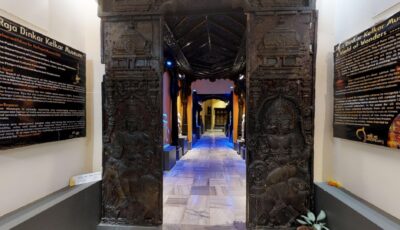
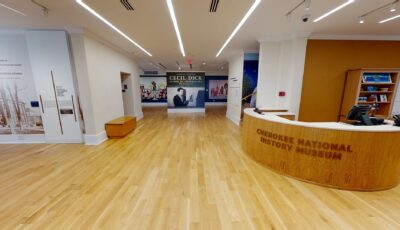
Enhance your classroom experience with our comprehensive educational lesson plans designed to accompany this virtual tour. Each lesson plan aligns with national educational standards and includes pre-tour activities, guided exploration questions, discussion prompts, and post-tour assessment materials. Perfect for grades K-12 and higher education.
Share This Virtual Tour
Know someone who would enjoy this virtual field trip? Share this 3D tour with teachers, students, friends, and family. Virtual field trips make learning accessible to everyone, regardless of location or ability to travel.