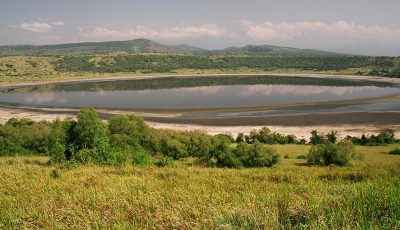
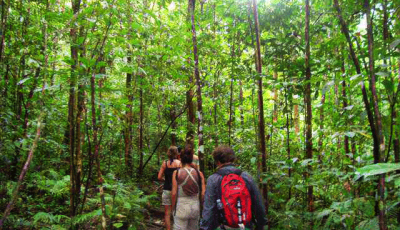
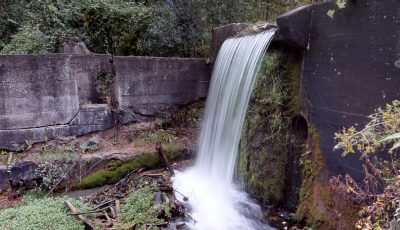
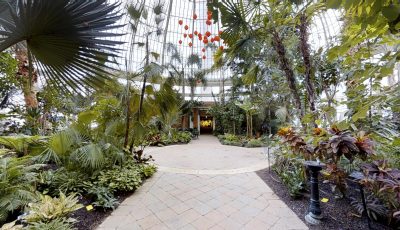
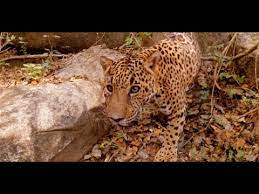
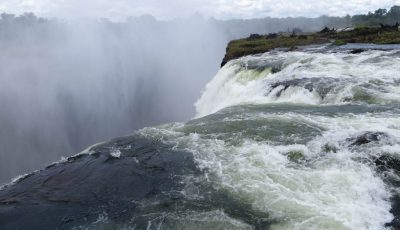
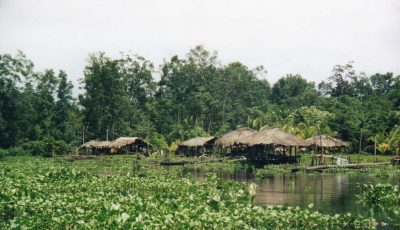
The Amazon rainforest, also called the Amazon jungle, Amazonia, or simply the Amazon, is a moist broadleaf tropical rainforest in the Amazon biome that covers most of the Amazon basin of South America. This basin encompasses 7 million km2 (2.7 million sq mi), of which 6 million km2 (2.3 million sq mi) are covered by the rainforest. This region includes territory belonging to nine nations and 3,344 indigenous territories. The majority of the forest, 60%, is in Brazil, followed by Peru with 13%, Colombia with 10%, and with minor amounts in Bolivia, Ecuador, French Guiana, Guyana, Suriname, and Venezuela. Four nations have “Amazonas” as the name of one of their first-level administrative regions, and France uses the name “Guiana Amazonian Park” for French Guiana’s protected rainforest area. The Amazon represents over half of the total area of remaining rainforests on Earth, and comprises the largest and most biodiverse tract of tropical rainforest in the world, with an estimated 390 billion individual trees in about 16,000 species. More than 30 million people of 350 different ethnic groups live in the Amazon, which are subdivided into 9 different national political systems and 3,344 formally acknowledged indigenous territories. Indigenous peoples make up 9% of the total population, and 60 groups remain largely isolated. Large scale deforestation is occurring in the forest, creating different harmful effects.
Information sourced from Wikipedia, licensed under CC-BY-SA.
Educational Lesson Plans
Enhance your classroom experience with our comprehensive educational lesson plans designed to accompany this virtual tour. Each lesson plan aligns with national educational standards and includes pre-tour activities, guided exploration questions, discussion prompts, and post-tour assessment materials. Perfect for grades K-12 and higher education.
Share This Virtual Tour
Know someone who would enjoy this virtual field trip? Share this 3D tour with teachers, students, friends, and family. Virtual field trips make learning accessible to everyone, regardless of location or ability to travel.