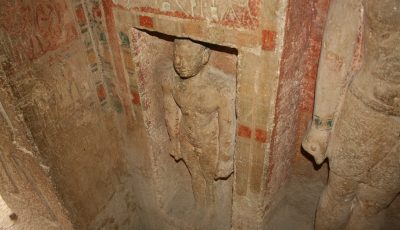
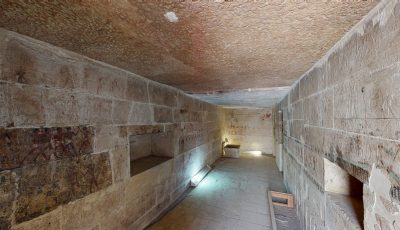
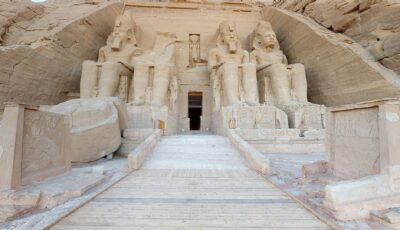
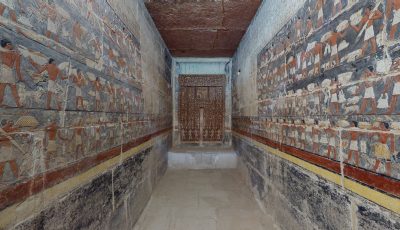
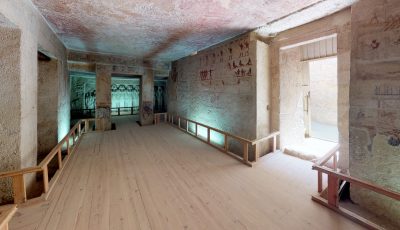
The question of the race of the people of ancient Egypt was raised historically as a product of the early racial concepts of the 18th and 19th centuries, and was linked to models of racial hierarchy primarily based on craniometry and anthropometry. A variety of views circulated about the racial identity of the Egyptians and the source of their culture. Some scholars argued that ancient Egyptian culture was influenced by other Afroasiatic-speaking populations in North Africa, the Horn of Africa, or West Asia, while others pointed to influences from various Nubian groups or populations in Europe. In more recent times, some writers continued to challenge the mainstream view, some focusing on questioning the race of specific notable individuals, such as the pharaoh represented in the Great Sphinx of Giza, the native Egyptian pharaoh Tutankhamun, the Egyptian queen Tiye, and the Greek Ptolemaic queen Cleopatra VII. Mainstream Western scholars reject the notion that Egypt was a “white” or “black” civilization; they maintain that applying modern notions of black or white races to ancient Egypt is anachronistic. In addition, scholars reject the notion—implicit in a black or white Egypt hypothesis—that ancient Egypt was racially homogeneous; instead, skin colour varied between the peoples of Lower Egypt, Upper Egypt, and Nubia, who rose to power in various eras of ancient Egypt.
Information sourced from Wikipedia, licensed under CC-BY-SA.
Educational Lesson Plans
Enhance your classroom experience with our comprehensive educational lesson plans designed to accompany this virtual tour. Each lesson plan aligns with national educational standards and includes pre-tour activities, guided exploration questions, discussion prompts, and post-tour assessment materials. Perfect for grades K-12 and higher education.
Share This Virtual Tour
Know someone who would enjoy this virtual field trip? Share this 3D tour with teachers, students, friends, and family. Virtual field trips make learning accessible to everyone, regardless of location or ability to travel.