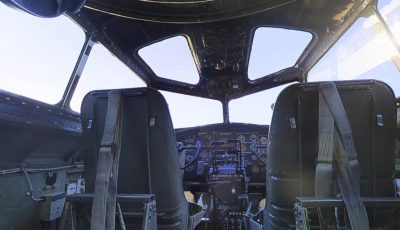
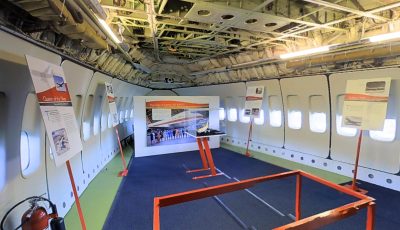
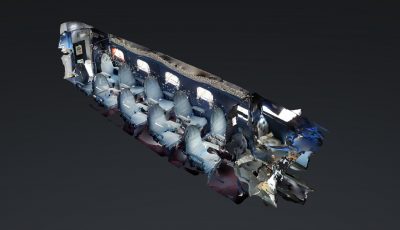
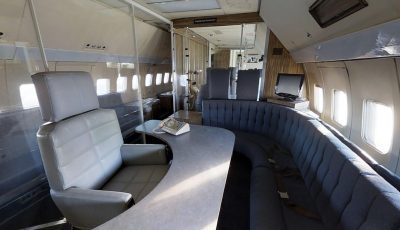
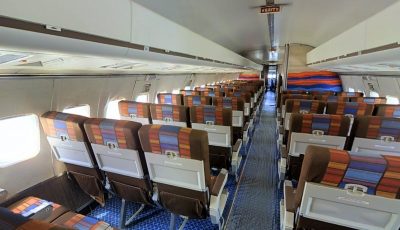
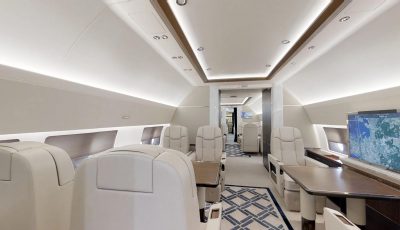
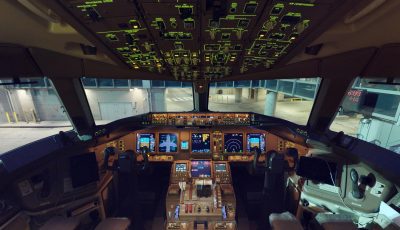
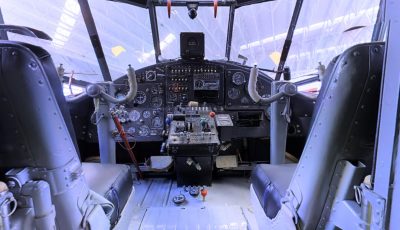
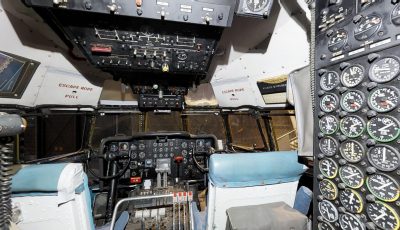
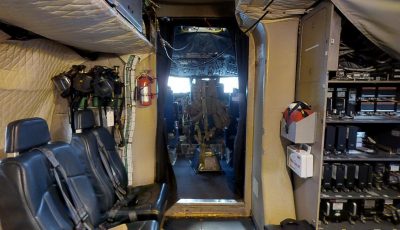
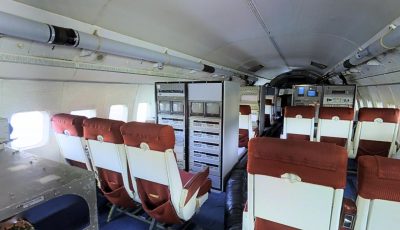
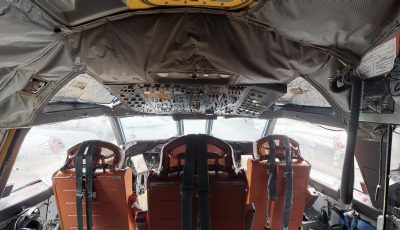
The Boeing 787 Dreamliner, often shortened to Boeing 787, is an American wide-body airliner developed and manufactured by Boeing Commercial Airplanes. After dropping its unconventional Sonic Cruiser project, Boeing announced the conventional 7E7 on January 29, 2003, which focused largely on efficiency. The program was launched on April 26, 2004, with an order for 50 aircraft from All Nippon Airways (ANA), targeting a 2008 introduction. On July 8, 2007, a prototype 787 without major operating systems was rolled out; subsequently the aircraft experienced multiple delays, until its maiden flight on December 15, 2009. Type certification was received in August 2011, and the first 787-8 was delivered in September 2011 and entered commercial service in October 2011, with ANA. At launch, Boeing targeted the 787 with 20% less fuel burn compared to aircraft like the Boeing 767. It could carry 200 to 300 passengers on point-to-point routes up to 8,500 nautical miles [nmi] (15,700 km; 9,800 mi), a shift from hub-and-spoke travel. The twinjet is powered by General Electric GEnx or Rolls-Royce Trent 1000 high-bypass turbofans. It is the first airliner with an airframe primarily made of composite materials and makes greater use of electrical systems. Externally, it is recognizable by its four-window cockpit, raked wingtips, and noise-reducing chevrons on its engine nacelles. Development and production rely on subcontractors around the world more than for previous Boeing aircraft.
Information sourced from Wikipedia, licensed under CC-BY-SA.
Educational Lesson Plans
Enhance your classroom experience with our comprehensive educational lesson plans designed to accompany this virtual tour. Each lesson plan aligns with national educational standards and includes pre-tour activities, guided exploration questions, discussion prompts, and post-tour assessment materials. Perfect for grades K-12 and higher education.
Share This Virtual Tour
Know someone who would enjoy this virtual field trip? Share this 3D tour with teachers, students, friends, and family. Virtual field trips make learning accessible to everyone, regardless of location or ability to travel.