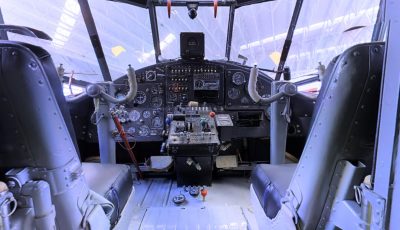
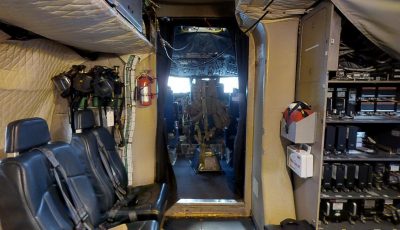
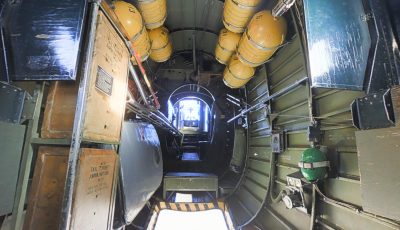
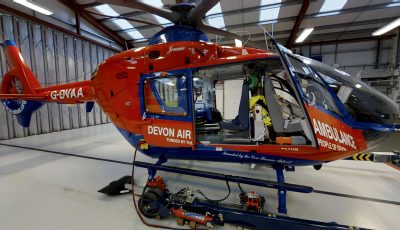
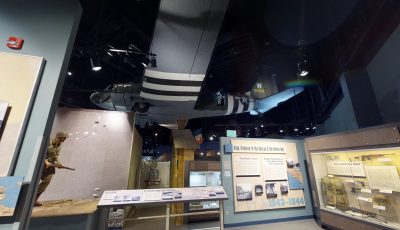
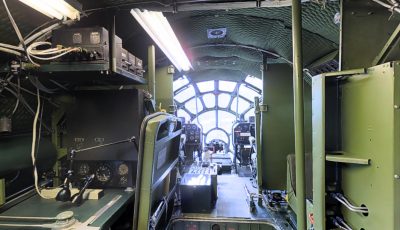
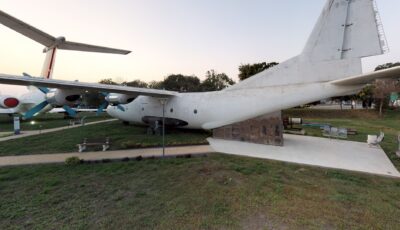
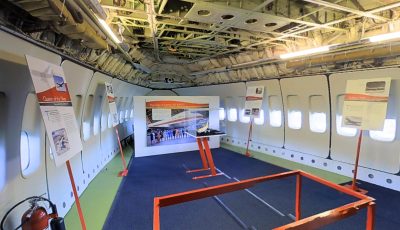
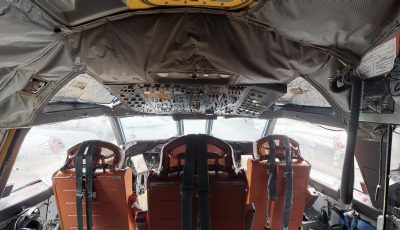
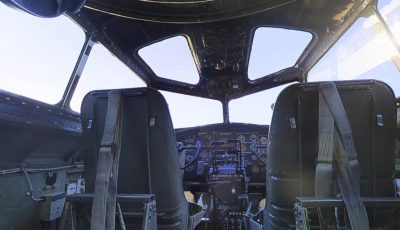
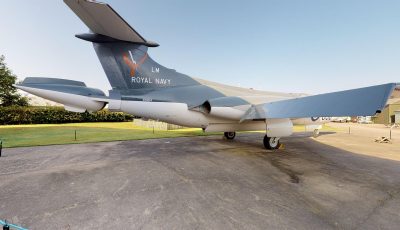
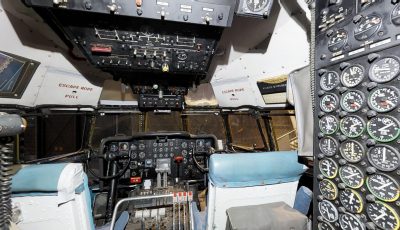
The Boeing CH-47 Chinook is a tandem-rotor helicopter originally developed by American rotorcraft company Vertol and now manufactured by Boeing Defense, Space & Security. The Chinook is a heavy-lift helicopter that is the second-heaviest lifting Western helicopter to the Sikorsky CH-53. Its name, Chinook, is from the Native American Chinook people of Oregon and Washington. The Chinook was originally designed by Vertol, which had begun work in 1957 on a new tandem-rotor helicopter, designated as the Vertol Model 107 or V-107. Around the same time, the United States Department of the Army announced its intention to replace the piston-engine–powered Sikorsky CH-37 Mojave with a new, gas turbine–powered helicopter. During June 1958, the U.S. Army ordered a small number of V-107s from Vertol under the YHC-1A designation; following testing, some Army officials considered it to be too heavy for the assault missions and too light for transport purposes. While the YHC-1A would be improved and adopted by the U.S. Marine Corps as the CH-46 Sea Knight, the Army sought a heavier transport helicopter and ordered an enlarged derivative of the V-107 with the Vertol designation Model 114. Initially designated as the YHC-1B, on 21 September 1961, the preproduction rotorcraft performed its maiden flight. In 1962, the HC-1B was redesignated CH-47A under the 1962 United States Tri-Service aircraft designation system.
Information sourced from Wikipedia, licensed under CC-BY-SA.
Educational Lesson Plans
Enhance your classroom experience with our comprehensive educational lesson plans designed to accompany this virtual tour. Each lesson plan aligns with national educational standards and includes pre-tour activities, guided exploration questions, discussion prompts, and post-tour assessment materials. Perfect for grades K-12 and higher education.
Share This Virtual Tour
Know someone who would enjoy this virtual field trip? Share this 3D tour with teachers, students, friends, and family. Virtual field trips make learning accessible to everyone, regardless of location or ability to travel.