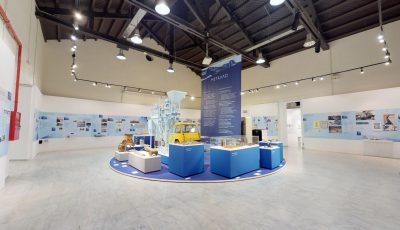
Albert Einstein (14 March 1879 – 18 April 1955) was a German-born theoretical physicist best known for developing the known theory of relativity. Einstein also made important contributions to quantum theory. His mass–energy equivalence formula E = mc2, which arises from special relativity, has been called “the world’s most famous equation”. He received the 1921 Nobel Prize in Physics for “his services to theoretical physics, and especially for his discovery of the law of the photoelectric effect”. Born as a subject to the Kingdom of Württemberg, part of the German Empire, Einstein moved to Switzerland in 1895, forsaking his citizenship the following year. In 1897, at the age of seventeen, he enrolled in the mathematics and physics teaching diploma program at the Swiss federal polytechnic school in Zurich, graduating in 1900. He acquired Swiss citizenship a year later, which he kept for the rest of his life, and afterwards secured a permanent position at the Swiss Patent Office in Bern. In 1905, he submitted a successful PhD dissertation to the University of Zurich. In 1914, he moved to Berlin to join the Prussian Academy of Sciences and the Humboldt University of Berlin, becoming director of the Kaiser Wilhelm Institute for Physics in 1917; he also became a Prussian and consequently also German citizen again. In 1933, while Einstein was visiting the United States, Adolf Hitler came to power in Germany.
Information sourced from Wikipedia, licensed under CC-BY-SA.
Educational Lesson Plans
Enhance your classroom experience with our comprehensive educational lesson plans designed to accompany this virtual tour. Each lesson plan aligns with national educational standards and includes pre-tour activities, guided exploration questions, discussion prompts, and post-tour assessment materials. Perfect for grades K-12 and higher education.
Share This Virtual Tour
Know someone who would enjoy this virtual field trip? Share this 3D tour with teachers, students, friends, and family. Virtual field trips make learning accessible to everyone, regardless of location or ability to travel.