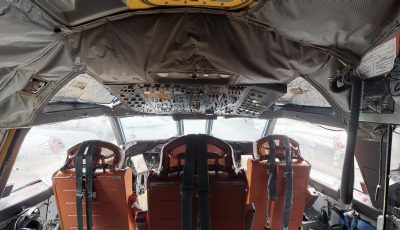
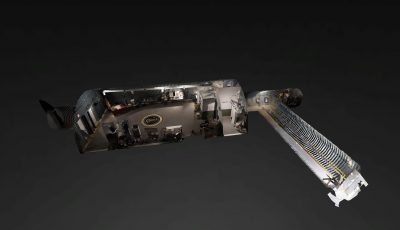
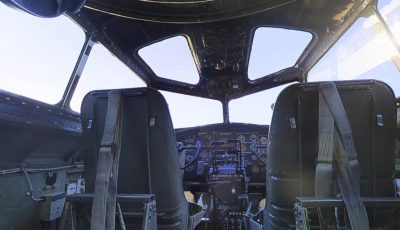
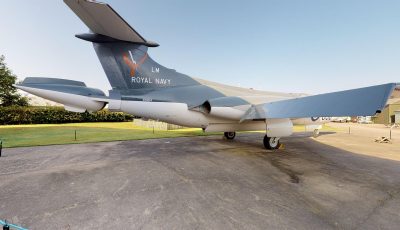
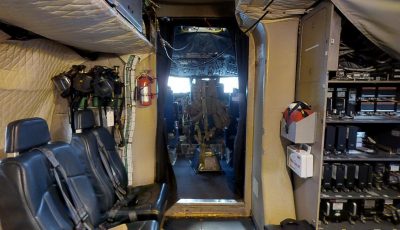
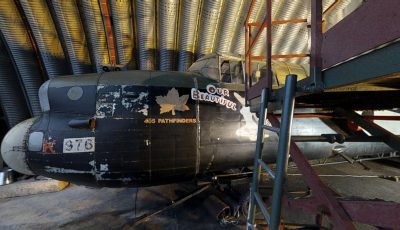
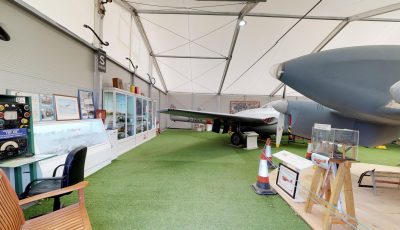
The “V bombers” were the Royal Air Force (RAF) aircraft during the 1950s and 1960s that comprised the United Kingdom’s strategic nuclear strike force known officially as the V force or Bomber Command Main Force. The three models of strategic bomber, known collectively as the V class, were the Vickers Valiant, which first flew in 1951 and entered service in 1955; the Avro Vulcan, which first flew in 1952 and entered service in 1956; and the Handley Page Victor, which first flew in 1952 and entered service in 1957. The V Bomber force reached its peak in June 1964 with 50 Valiants, 70 Vulcans and 39 Victors in service. When it became clear that the Soviet Union’s surface-to-air missiles like the S-75 Dvina could bring down high-flying aircraft, the V bomber force changed to low-level attack methods. Additionally the Blue Steel missile profile was changed to one of low level penetration and release. This reduced its range significantly. It was then planned to move to the much longer-ranged Skybolt air-launched ballistic missile. When the US cancelled Skybolt, the survivability of the V force was highly questionable. This led to the Royal Navy taking over the nuclear deterrent role from 1968, using UGM-27 Polaris submarine launched ballistic missiles launched from nuclear submarines. The tactical role passed to smaller aircraft like the SEPECAT Jaguar and Panavia Tornado.
Information sourced from Wikipedia, licensed under CC-BY-SA.
Educational Lesson Plans
Enhance your classroom experience with our comprehensive educational lesson plans designed to accompany this virtual tour. Each lesson plan aligns with national educational standards and includes pre-tour activities, guided exploration questions, discussion prompts, and post-tour assessment materials. Perfect for grades K-12 and higher education.
Share This Virtual Tour
Know someone who would enjoy this virtual field trip? Share this 3D tour with teachers, students, friends, and family. Virtual field trips make learning accessible to everyone, regardless of location or ability to travel.