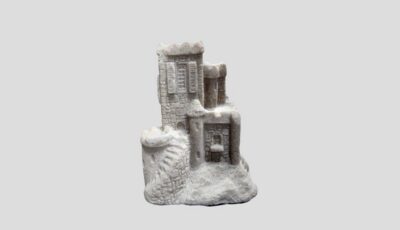
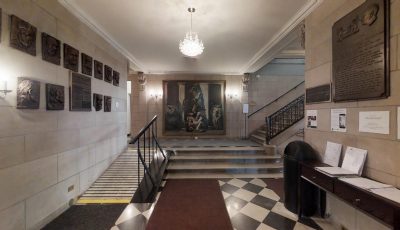
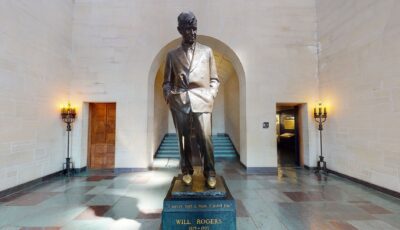
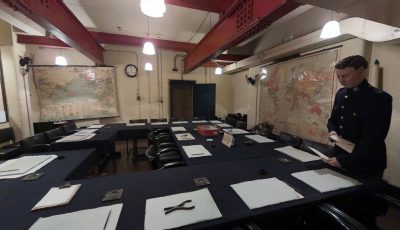
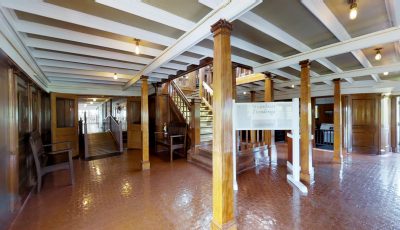
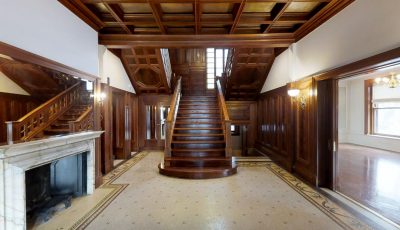
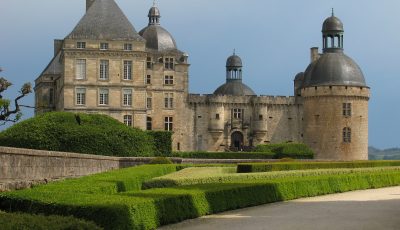
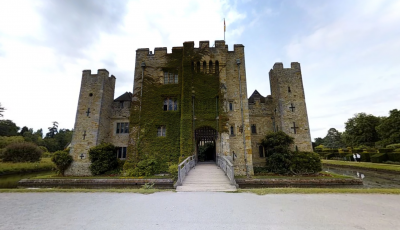
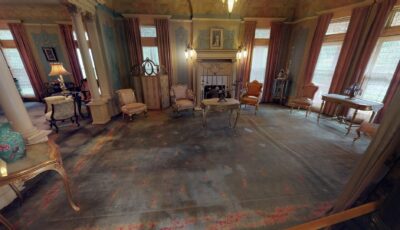
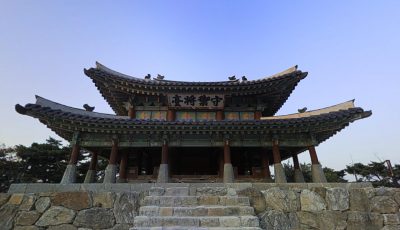
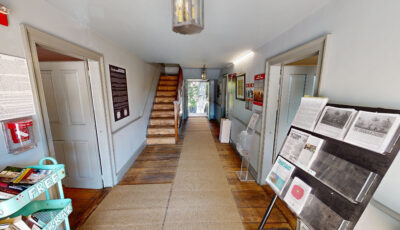
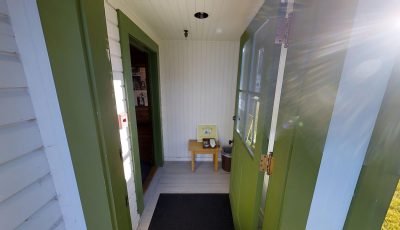
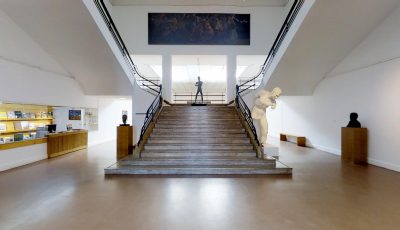
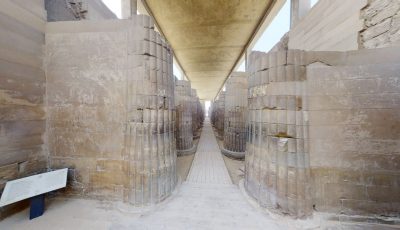
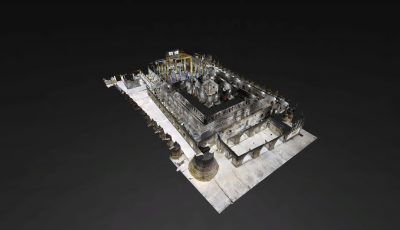
Himeji Castle (???, Himeji-j?; [çime?(d)?i?(d)?o??] ) is a hilltop Japanese castle complex situated in Himeji, a city in Hy?go Prefecture, Japan. The castle is regarded as the finest surviving example of prototypical Japanese castle architecture, comprising a network of 83 structures with advanced defensive systems from the feudal period. The castle is frequently known as Hakuro-j? or Shirasagi-j? (“White Egret Castle” or “White Heron Castle”) because of its brilliant white exterior and supposed resemblance to a bird taking flight. As with almost all Japanese castles from the Azuchi-Momoyama period onward, the tenshu (??, main keep), the most prominent structure, was used as a storehouse in times of peace and as a fortified tower in times of war, and the daimyo (??, feudal lord)’s government offices and residences were located in a group of single-story buildings near the tenshu and the surrounding yagura (?, turrets). Himeji Castle dates to 1333 when Akamatsu Norimura built a fort on top of Himeyama hill. The fort was dismantled and rebuilt as Himeyama Castle in 1346 and then remodeled into Himeji Castle two centuries later. Himeji Castle was then significantly remodeled in 1581 by Toyotomi Hideyoshi, who added a three-story castle keep. In 1600, Tokugawa Ieyasu awarded the castle to Ikeda Terumasa for his help in the Battle of Sekigahara, and Ikeda completely rebuilt the castle from 1601 to 1609, expanding it into a large castle complex.
Information sourced from Wikipedia, licensed under CC-BY-SA.
Educational Lesson Plans
Enhance your classroom experience with our comprehensive educational lesson plans designed to accompany this virtual tour. Each lesson plan aligns with national educational standards and includes pre-tour activities, guided exploration questions, discussion prompts, and post-tour assessment materials. Perfect for grades K-12 and higher education.
Share This Virtual Tour
Know someone who would enjoy this virtual field trip? Share this 3D tour with teachers, students, friends, and family. Virtual field trips make learning accessible to everyone, regardless of location or ability to travel.