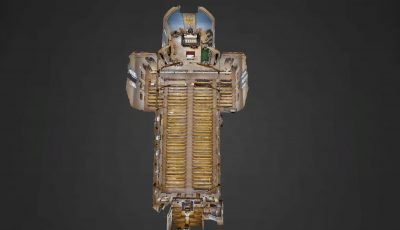
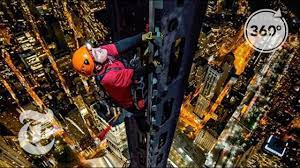
The Washington Monument is a 555-foot (169 m) tall obelisk on the National Mall in Washington, D.C., built to commemorate George Washington, a Founding Father of the United States and the nation’s first president. Standing east of the Reflecting Pool and the Lincoln Memorial, the monument is made of bluestone gneiss for the foundation and of granite for the construction. The outside facing consists of three different kinds of white marble, as the building process was repeatedly interrupted. The monument stands 554 feet 7+11?32 inches (169.046 m) tall, according to U.S. National Geodetic Survey measurements in 2013 and 2014. It is the third tallest monumental column in the world, trailing only the Juche Tower in Pyongyang, and the San Jacinto Monument in Houston, Texas. It was the world’s tallest structure between 1884 and 1889, after which it was overtaken by the Eiffel Tower, in Paris. Construction of the presidential memorial began in 1848. The construction was suspended from 1854 to 1877 due to funding challenges, a struggle for control over the Washington National Monument Society, and the American Civil War. The stone structure was completed in 1884, and the internal ironwork, the knoll, and installation of memorial stones was completed in 1888. The original design was by Robert Mills from South Carolina, but construction omitted his proposed colonnade for lack of funds, and construction proceeded instead with a bare obelisk.
Information sourced from Wikipedia, licensed under CC-BY-SA.
Educational Lesson Plans
Enhance your classroom experience with our comprehensive educational lesson plans designed to accompany this virtual tour. Each lesson plan aligns with national educational standards and includes pre-tour activities, guided exploration questions, discussion prompts, and post-tour assessment materials. Perfect for grades K-12 and higher education.
Share This Virtual Tour
Know someone who would enjoy this virtual field trip? Share this 3D tour with teachers, students, friends, and family. Virtual field trips make learning accessible to everyone, regardless of location or ability to travel.