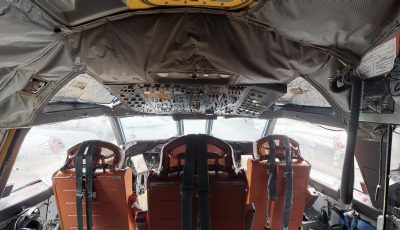
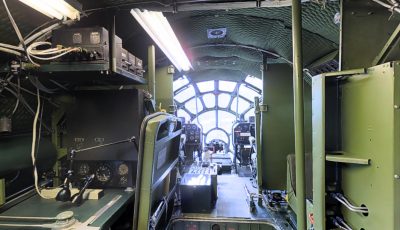
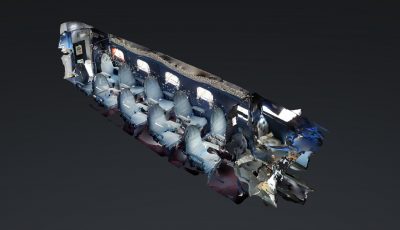
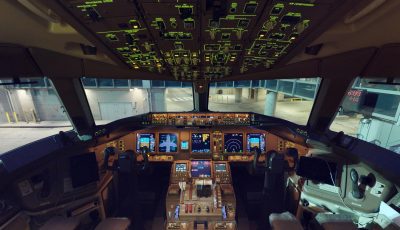
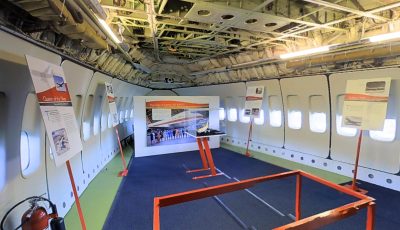
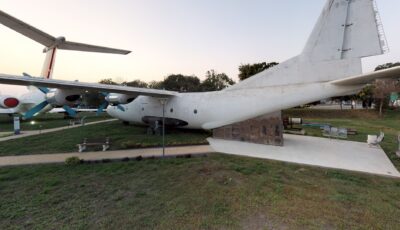
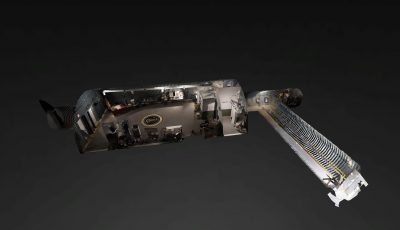
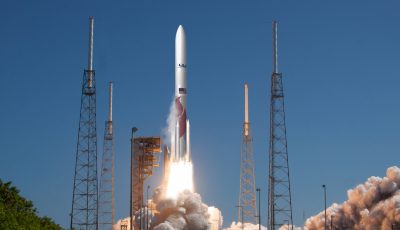
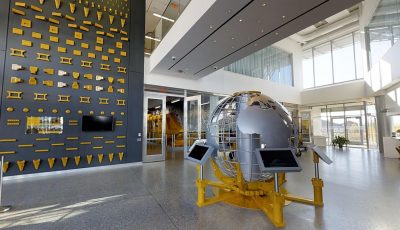
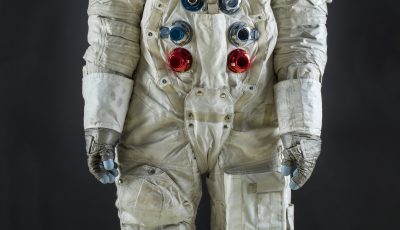
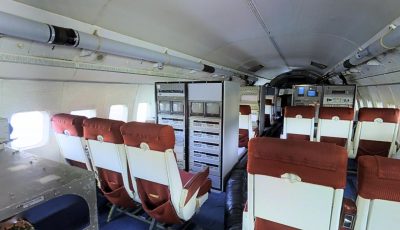
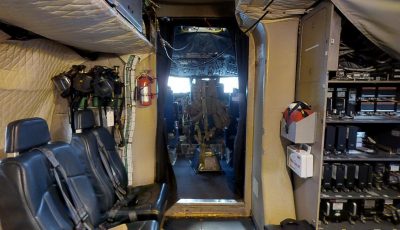
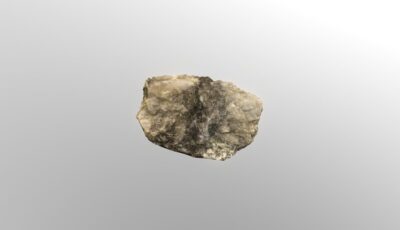
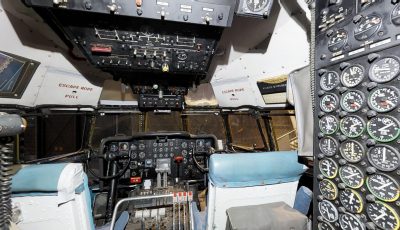
The Space Shuttle orbiter was the spaceplane component of the Space Shuttle, a partially reusable orbital spacecraft system that was part of the discontinued Space Shuttle program. Operated from 1981 to 2011 by NASA, the U.S. space agency, this vehicle could carry astronauts and payloads into low Earth orbit, perform in-space operations, then re-enter the atmosphere and land as a glider, returning its crew and any on-board payload to the Earth. Six orbiters were built for flight: Enterprise, Columbia, Challenger, Discovery, Atlantis, and Endeavour. All were built in Palmdale, California, by the Pittsburgh, Pennsylvania-based Rockwell International company’s North American Aircraft Operations branch. The first orbiter, Enterprise, made its maiden flight in 1977. An unpowered glider, it was carried by a modified Boeing 747 airliner called the Shuttle Carrier Aircraft and released for a series of atmospheric test flights and landings. Enterprise was partially disassembled and retired after completion of critical testing. The remaining orbiters were fully operational spacecraft, and were launched vertically as part of the Space Shuttle stack. Columbia was the first space-worthy orbiter; it made its inaugural flight in 1981. Challenger, Discovery, and Atlantis followed in 1983, 1984, and 1985, respectively. In 1986, Challenger was destroyed in a disaster shortly after its 10th launch, killing all seven crew members.
Information sourced from Wikipedia, licensed under CC-BY-SA.
Educational Lesson Plans
Enhance your classroom experience with our comprehensive educational lesson plans designed to accompany this virtual tour. Each lesson plan aligns with national educational standards and includes pre-tour activities, guided exploration questions, discussion prompts, and post-tour assessment materials. Perfect for grades K-12 and higher education.
Share This Virtual Tour
Know someone who would enjoy this virtual field trip? Share this 3D tour with teachers, students, friends, and family. Virtual field trips make learning accessible to everyone, regardless of location or ability to travel.